Business trip abroad: which costs you deduct and what to do with the VAT
 Written by Ilias Aarrass6 min read · Published on · Last reviewed on
In short
Travel and accommodation for a client visit abroad are fully deductible, meals at 80 per cent, and foreign VAT is reclaimed separately through an EU refund request.
- Foreign VAT does not belong in your Dutch return; the refund request is filed by 30 September of the following year.
- For a conference or seminar, travel and accommodation fall under the limited deduction instead.
- International passenger transport carries no Dutch VAT, so there is nothing to reclaim.
- Keep the programme, your diary and correspondence as evidence that the trip was business.
A client in Antwerp, a trade fair in Cologne or an assignment lasting two weeks in Barcelona: the moment you cross the border the rules for your costs change. Your flight and hotel are deductible from your profit, but the VAT on that hotel bill cannot simply go into your Dutch return. And only part of your meals along the way is deductible. This article sets out per cost item what you deduct, where the VAT goes and what proof to keep if your trip also has a private side.
Travel, accommodation and meals: three rules
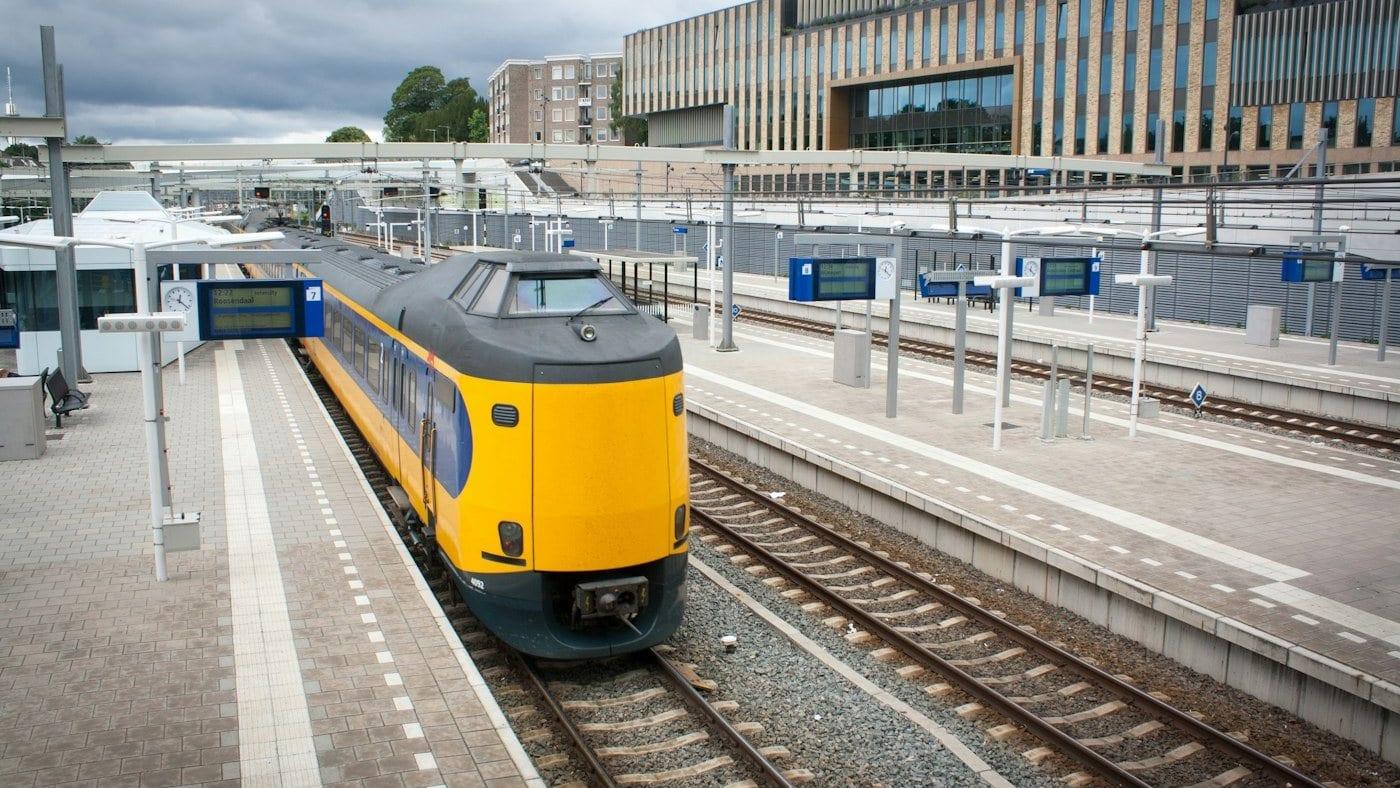
Your travel costs are fully deductible: flights, international rail, local taxis, a hire car and parking. International passenger transport carries no Dutch VAT, so there is nothing to reclaim there. If you drive your private car abroad, € 0.25 per kilometre applies, across the border too; see travel costs.
Your accommodation for a client visit or assignment is also fully deductible from your profit. If you travel for a conference, seminar or study trip, your travel and accommodation costs fall under the limited deduction instead; see deducting fair and conference costs. The bill does carry foreign VAT, and that does not come out of your Dutch return; there is a separate route for it, see the next section. Food and drink on the road are mixed costs: for income tax you deduct 80 per cent, or you use the threshold method with a € 5,700 threshold in 2026. See eating out with a client.
| Cost item | Deduction from profit | VAT |
|---|---|---|
| Flight and international rail | 100% | No Dutch VAT |
| Hotel for a client visit or assignment | 100% | Foreign VAT, via EU refund |
| Meals and business dinners | 80% or via the threshold | Not deductible |
| Taxi, parking, tolls and hire car fuel | 100% | Foreign VAT, via EU refund |
| Fair participation and stand hire | 100% | Often reverse-charged to you |
Foreign VAT: not in your return, but reclaimable
VAT you paid in Germany, Belgium or Spain does not belong in your Dutch VAT return. Put it there anyway and the correction will come back to you sooner or later. Instead you file an EU refund request once a year through the business portal, by 30 September of the following year at the latest. The thresholds and the steps are in reclaiming VAT from another EU country.
If you buy a service abroad from a business, for example stand hire or a consultant, that service is often taxed in the Netherlands and the supplier reverse-charges the VAT to you. You then declare that VAT yourself and deduct it in the same return. See VAT on invoices from foreign suppliers and reverse-charging VAT.
Worked example: three days at a fair in Cologne
- Return train tickets
- € 180, fully deductible
- Hotel, three nights
- € 480 including German VAT
- Food and drink
- € 210, of which 80% deductible
- Entry ticket and stand hire
- € 950, VAT reverse-charged to you
Result: Your profit is reduced by € 180 plus € 480 plus € 168 plus € 950, a total of € 1,778. You reclaim the German VAT on the hotel separately through the EU refund request; the reverse-charged VAT on the stand hire you declare and deduct in the same return.
Business, private or both
A trip that is mainly a holiday with one appointment in it is private. The other way round, on a business trip with a free weekend attached you deduct the business part: the outbound and return journey and the nights belonging to the work. If your partner travels with you, their costs are private, even if you share a room; only the part you would have incurred anyway is business. How to split such a mixed trip exactly, with a worked example, is explained in combining a business trip with a holiday.
Keep proof that the trip was business: the invitation or programme, your diary with appointments, correspondence with the client and possibly a short report. Without it, in an audit it is your word against an empty diary. Keep the documents digitally with the receipts, see storing receipts and invoices digitally.
If you will actually work in another EU country, for example on a building site or at a client's premises, apply for an A1 certificate. It shows you are insured in the Netherlands and is the first thing asked for in on-site checks. See the A1 certificate.
Frequently asked questions
Can I reclaim VAT on a foreign hotel?
Not through your Dutch return. You file an EU refund request with the tax authorities, by 30 September of the following year, with the invoices attached.
Are meals on a trip fully deductible?
No. Food and drink are mixed costs: 80 per cent deductible, or you apply the € 5,700 threshold. VAT on meals is not deductible in any case.
Can I deduct a trip if I add a few free days?
The business part yes: the journey itself and the nights belonging to the work. The extra days and the costs of an accompanying partner stay private.
What do I do with an invoice stating VAT is reverse-charged?
You declare that VAT yourself in your Dutch return and deduct it in the same return. On balance you pay nothing, but you do have to enter it.
Sources
- Reclaiming VAT from other EU countriesBelastingdienst · belastingdienst.nl
- Threshold for limited deductible costs 2026Belastingdienst · belastingdienst.nl
Sources checked on
This article provides general information based on the rules known for 2026 and does not replace personal tax advice. For your specific situation, we're happy to take a look with you.