Painter, plasterer or handyman for private clients: how VAT works
 Written by Ilias Aarrass8 min read · Published on · Last reviewed on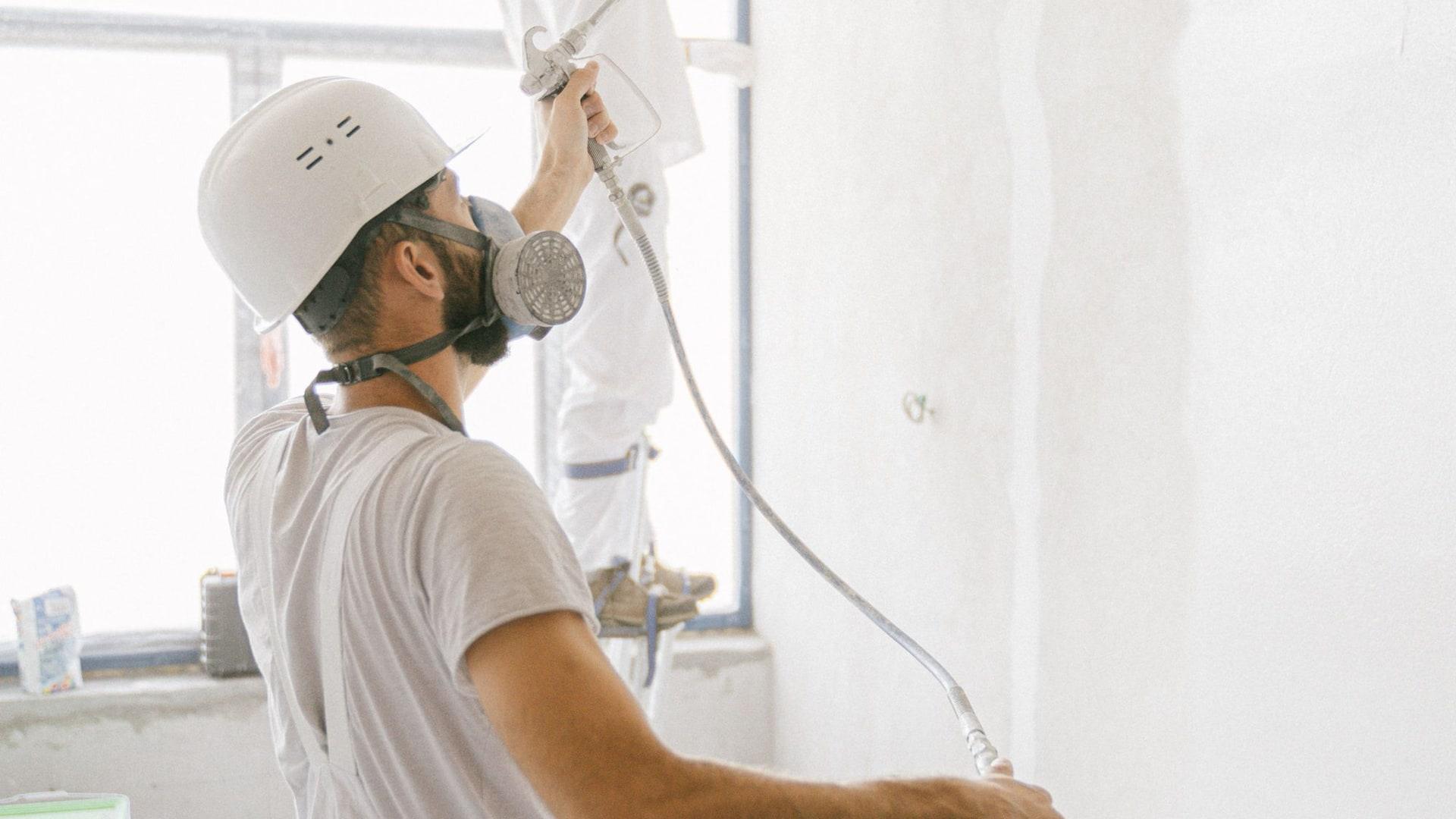
In short
Painting, plastering and wallpapering homes older than two years falls under 9% VAT, materials included; other handyman work and all work on commercial premises stays at 21%.
- For fitting insulation material the 9 per cent rate covers only the labour, not the material.
- The burden of proof for the age of the home is yours: record the construction year or have the client sign a statement, and keep it with the invoice.
- Reverse charging applies only to subcontracting and hiring out staff; working directly for a private client, you simply invoice with VAT.
- For a mixed job, list both parts as separate lines on one invoice, each with its own amount, rate and VAT amount.
Many self-employed builders know the reverse-charge scheme: VAT is shifted to the contractor. But that scheme by no means always applies. If you work directly for private clients, you charge VAT yourself, and then the next question arises: 9% or 21%? This article sets out the rules for painters, plasterers and handyman businesses that (also) work for private clients.
Reverse charge: only in subcontracting, never to private clients
The reverse-charge scheme in construction applies to subcontracting and the hiring out of staff: you carry out physical work on immovable property on behalf of a contractor, and that contractor remits the VAT. Your invoice then states 'VAT reverse-charged' plus your client's VAT number, and you charge no VAT yourself.
If you work directly for a private client, there is nothing to reverse-charge. A private individual has no VAT number and files no VAT returns. So you simply invoice with VAT. The same applies when you work directly for a business as the main contractor without any subcontracting: you charge VAT yourself then too. The rule of thumb: you only reverse-charge when there is a contractor above you; cleaning work in subcontracting follows exactly the same line.
Painting and plastering: 9% for homes older than two years
For painting and plastering work on homes older than two years, the reduced 9% rate applies. That rate covers the whole job, including the materials you use, such as paint, filler and plaster. It must be a home, though: offices, shops and commercial buildings fall under 21%, regardless of their age.
You must be able to substantiate that the home is older than two years. Ask the resident for a statement or record the construction year, for example via the public buildings register. When in doubt, or for a home younger than two years, charge 21%. If you combine painting with other odd jobs, split the invoice: the painting part at 9%, the rest at 21%.
| Work | VAT | Materials |
|---|---|---|
| Painting | 9% | Included at 9% |
| Plastering | 9% | Included at 9% |
| Wallpapering | 9% | Included at 9% |
| Fitting insulation material | 9% on the labour | Material at 21% |
| Carpentry, tiling, fitting a kitchen or bathroom | 21% | 21% |
| All work on offices, shops and commercial premises | 21% | 21% |
How to substantiate the age of the home
The burden of proof is on you, not the client. In an audit you must be able to show why you charged 9 per cent. Record the address and construction year from the public buildings register with the job, or have the client sign a short statement that the home has been in use for more than two years since completion. Keep it with the invoice; that falls under your retention obligation.
If you wrongly charge 9 per cent, the tax authorities collect the difference from you. Your client has long since paid and the chance of recovering that 12 per cent afterwards is small.
General handyman work: almost always 21%
General handyman work, such as renovating a bathroom, installing a kitchen, carpentry or tiling, falls under the standard 21% rate. Also for homes older than two years. The 9% rate in construction is an exception for specific services, such as painting, plastering, wallpapering and installing insulation material in homes older than two years. For insulation work, the 9% rate moreover only covers the labour, not the material.
If one job involves different types of work, be sharp about the split. A handyman business that plasters a living room (9%) and then builds a partition wall (21%) lists both items separately on the invoice, each with the correct rate.
Buying and passing on materials
Your purchases at the wholesaler or hardware store carry 21% VAT, which you reclaim as input tax. When you pass materials on to a private client, the rate of the service they belong to applies: paint in a 9% painting job goes at 9%, tiles in a 21% job at 21%. List materials and labour separately on the invoice, so it is clear to the client and the tax authorities what you charged.
Quotes, down payments and your records
Private jobs often involve a down payment. On an advance payment you owe VAT immediately in the period in which you invoice or receive the money, not only when the job is finished. So process down payments in your VAT return right away.
In addition, track your hours and materials per job. That substantiates your invoices, helps in discussions with clients and shows your real margin per project. If you drive a van full of tools, do not forget your kilometres or vehicle costs either: in construction they are often a substantial deduction.
- State the rate per item in your quote, so there is no discussion about the final amount later.
- Invoice a down payment at the rate of the work it belongs to, and declare it right away. See booking advances and down payments.
- If you also work as a subcontractor the same week, keep those invoices strictly separate; the reverse charge applies there.
- Record per job why you chose 9 or 21 per cent, for instance already in your quote. One line with the invoice is enough.
- If a private client defaults, do not wait too long; see client does not pay.
Worked example: a mixed job in a home built in 1998
- Plastering the living room, including plaster
- € 2,000 + 9% = € 2,180
- Building a new partition wall
- € 1,500 + 21% = € 1,815
- Total on one invoice, two lines
- € 3,995
Result: Put everything at 21 per cent and your client pays € 240 too much. Put everything at 9 per cent and you foot the additional assessment
Frequently asked questions
May I charge 9 per cent VAT on painting?
Yes, if it concerns a home older than two years at the time of the work and the client is a private individual. Materials such as paint and filler go at 9 per cent too. For offices and commercial premises it is always 21 per cent.
Does the 9 per cent rate cover tiling or fitting a kitchen?
No. The reduced rate covers only specific services: painting, plastering, wallpapering and fitting insulation material. Other handyman work falls under 21 per cent, even in an old home.
How do I prove a home is older than two years?
Record the construction year from the public buildings register with the job, or have the client sign a short statement. Keep it with the invoice. The burden of proof is on you, so without substantiation you risk an assessment for the difference.
Must I reverse-charge when working for a private client?
No, never. A private individual has no VAT number and files no return. You only reverse-charge when a contractor or owner-builder sits above you in the chain.
How do I invoice a job with two rates?
On one invoice, with separate lines per rate and, per line, the amount excluding VAT, the rate and the VAT amount. Two subtotals at the bottom. That makes it immediately clear to client and tax authorities what falls where.
Can I reclaim input VAT on a 9 per cent job?
Yes, in full. You buy paint and plaster at 21 per cent and reclaim that as input VAT, even though you invoice the job at 9 per cent. That difference often results in a refund.
Sources
- Work on homes over 2 years old at 9% VATBelastingdienst · belastingdienst.nl
- Reverse charge for subcontracting and hiring out staffBelastingdienst · belastingdienst.nl
Sources checked on
This article provides general information based on the rules known for 2026 and does not replace personal tax advice. For your specific situation, we're happy to take a look with you.