Sending invoices by email: is it allowed and how do you prove it?
 Written by Ilias Aarrass5 min read · Published on · Last reviewed on
In short
An invoice sent as a PDF by email is fully valid as long as your client accepts that form, but to claim interest or collection costs you must be able to show the invoice and the reminder reached the client, and that burden of proof rests with you.
- Acceptance of the electronic form need not be in writing: paying is acceptance enough.
- A PDF is not an e-invoice in the UBL or Peppol sense; that is mandatory for government contracts.
- Keep invoices for seven years in the form you sent them, so the PDF itself and preferably the email too.
- With a consumer the fourteen-day reminder must demonstrably have been received before you charge collection costs.
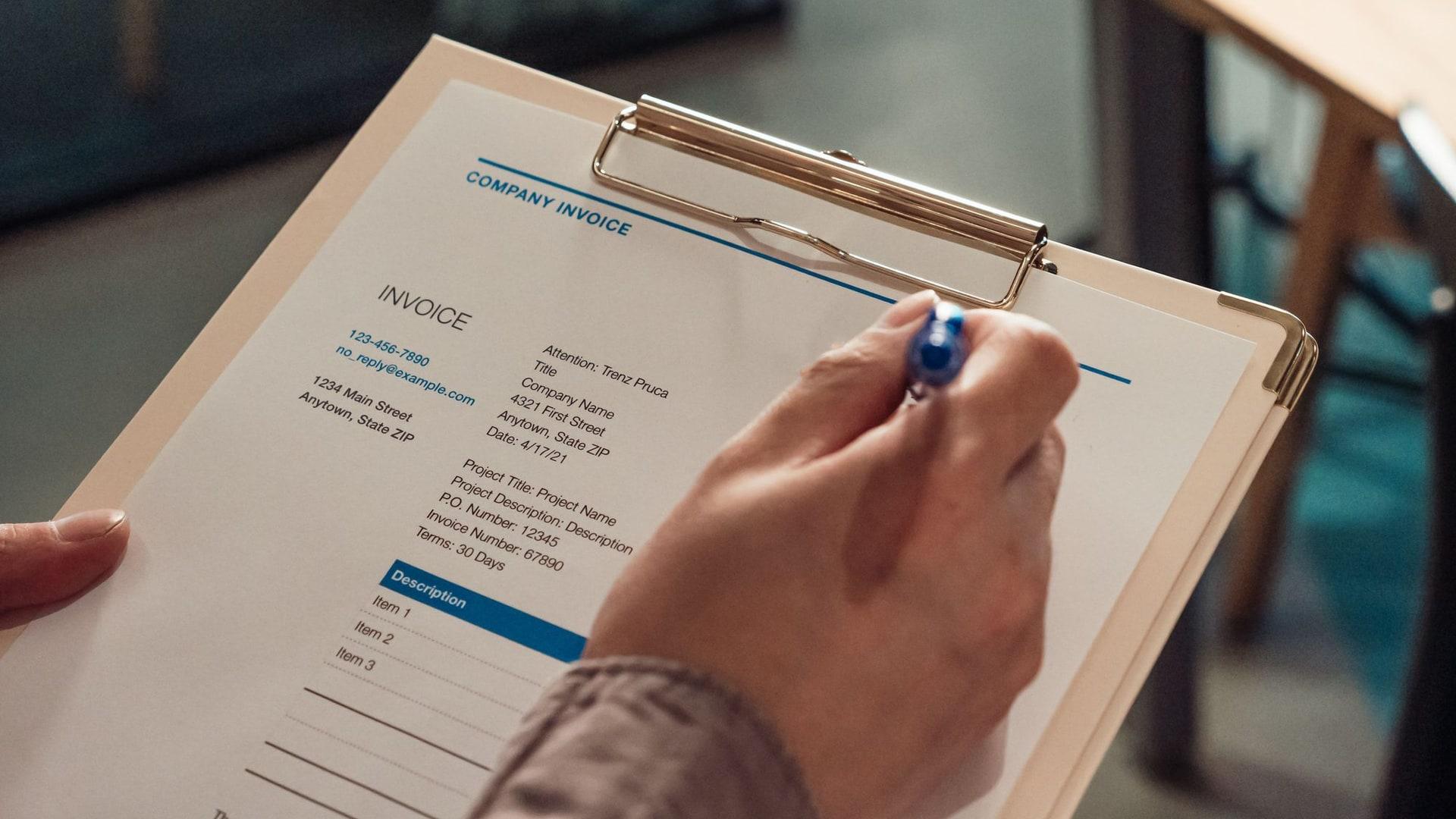
Almost nobody sends invoices by post any more, and there is no need: a PDF by email is a full invoice. Yet this goes wrong more often than you would think. Not because email is not allowed, but because with a client who does not pay you suddenly have to show the invoice arrived. And a sent email is not the same as a received one. This article covers the rules for electronic invoicing and how to set up your sending so you are in a strong position in a dispute.
Electronic invoicing is allowed, with one condition
An invoice may be electronic if your client accepts that form. That acceptance need not be in writing: if your client pays a PDF invoice without complaint, that is acceptance enough. The content and authenticity of the invoice must also be assured, but in practice a PDF you do not change afterwards is sufficient. Which details are mandatory is covered in creating your first invoice.
Note the difference with e-invoicing in the strict sense. That is an invoice in a fixed data format such as UBL, read straight into your client's bookkeeping. With government bodies that is mandatory, and more obligations are coming in Europe; see e-invoicing with UBL. A PDF is not an e-invoice in that sense, but for ordinary business clients and private individuals it is perfectly valid.
Sent is not received
As soon as a client fails to pay, the question arises whether they received the invoice. That is no formality: to claim statutory interest and collection costs, your client must have been put in default, and with a consumer you must first send a reminder with a fourteen-day period that the client actually received. The burden of proof lies with you as creditor. An email in your Sent folder is weak evidence for that.
Strengthen that in a few ways. Use invoicing software that logs when the email was delivered and whether it was opened. Send the invoice to an address the client provided themselves, for example in the assignment confirmation. For large amounts, ask for a short acknowledgement. And if you are heading towards a reminder to a private individual, also send it by post, possibly registered. More on that process is in a client who does not pay and statutory payment terms and collection costs.
| Way of sending | Evidential value |
|---|---|
| An ordinary email from your mail client | weak: only proof of sending |
| Invoicing software with a delivery log | reasonable: delivery and opening are logged |
| An invoice in a client portal the client visits | strong: the login is traceable |
| An acknowledgement from the client by email | strong: the client says so themselves |
| Registered post for a reminder | strongest, but only needed on escalation |
Keeping it in the form you sent
You must keep your invoices for seven years, and in the form in which you sent them. If you sent a PDF, you keep that PDF, not just a printout or a line in your bookkeeping. Preferably also keep the accompanying email, because it contains the date and the address you sent it to. How to set that up digitally is in keeping receipts and invoices digitally and the record-keeping obligation.
In practice that means: have your invoicing software archive the sent PDFs, or keep them in a folder per year with the invoice number in the filename. That way, if the tax authorities or a client asks, you can retrieve the original invoice within a minute, with its send date. Sequential numbering helps enormously; see invoice numbers and the rules.
- Ask every new client for their invoicing address and record it in the assignment confirmation.
- Send from software that logs delivery, not manually from your mailbox.
- Keep the sent PDF plus the accompanying email, for seven years.
- Also send a reminder to a private individual by post, with a fourteen-day period.
Practical problems you can avoid
The most common cause of an unpaid invoice is simple: it ended up in the spam filter or went to an address nobody reads any more. Large clients often work with a central accounts payable address or a portal where you have to upload the invoice; if you send it to your contact person, it will sit there. So ask at the first assignment how invoices should be delivered, and whether a purchase order number is required.
Also never send only a link to an invoice without an attachment. If that link later disappears, you can no longer supply the invoice in the form you sent. And check your sending address when you move to a new mail environment: bounced invoices sometimes go unnoticed for weeks, letting your payment term slip by. A fixed rhythm for chasing debtors catches that.
Frequently asked questions
Can I simply send an invoice by email?
Yes, if your client accepts that form, and in practice their payment already shows that. A PDF with all the mandatory invoice details is a full invoice.
Do I have to be able to prove my invoice arrived?
Not for the tax authorities, but you do if you want to claim interest or collection costs. The client must have been put in default, and with a consumer the fourteen-day reminder must have reached them.
Is a PDF the same as an e-invoice?
No. An e-invoice is a structured data file, for example UBL, read automatically into your client's records. For government contracts that is mandatory; for other clients a PDF is sufficient.
How long must I keep sent invoices?
Seven years, in the form in which you sent them. So keep the PDF itself and preferably the email you sent it with.
Sources
- Invoice requirementsBelastingdienst · belastingdienst.nl
- Keeping your invoicesBelastingdienst · belastingdienst.nl
Sources checked on
This article provides general information based on the rules known for 2026 and does not replace personal tax advice. For your specific situation, we're happy to take a look with you.