Desk, chair and monitor at home: deductible or not?
 Written by Ilias Aarrass6 min read · Published on · Last reviewed on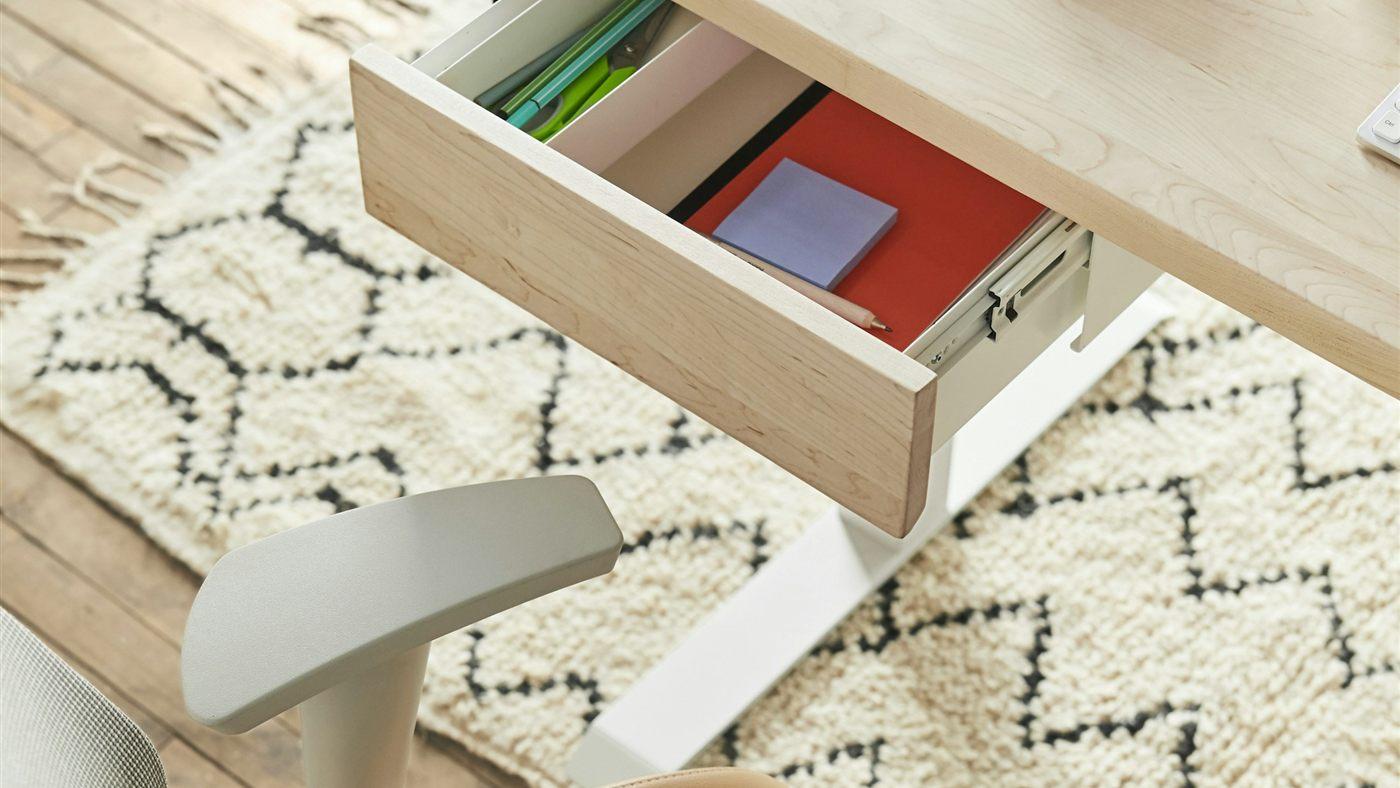
In short
A non-independent workspace in your home is not deductible, but the desk, chair and monitor in it are business assets: under 450 euros excluding VAT you deduct at once, above that you depreciate.
- The strict requirements apply to the space, not to the furnishings you use for business.
- You assess the 450 euro threshold per asset and not per receipt.
- You reclaim VAT in proportion to business use; record your split in writing.
- Items fixed to the home, such as a renovation, follow the workspace rules and not those for furnishings.
You work from home and buy a decent office chair, a large monitor and a desk. Can the business pay? Many freelancers think not, because they have read that a home office is rarely deductible. That is true, but these are two different things. The room is one question, the things in it are another. This article explains which rule applies where, when you deduct at once and when you depreciate, and how to handle private use.
The room and the furnishings are two stories
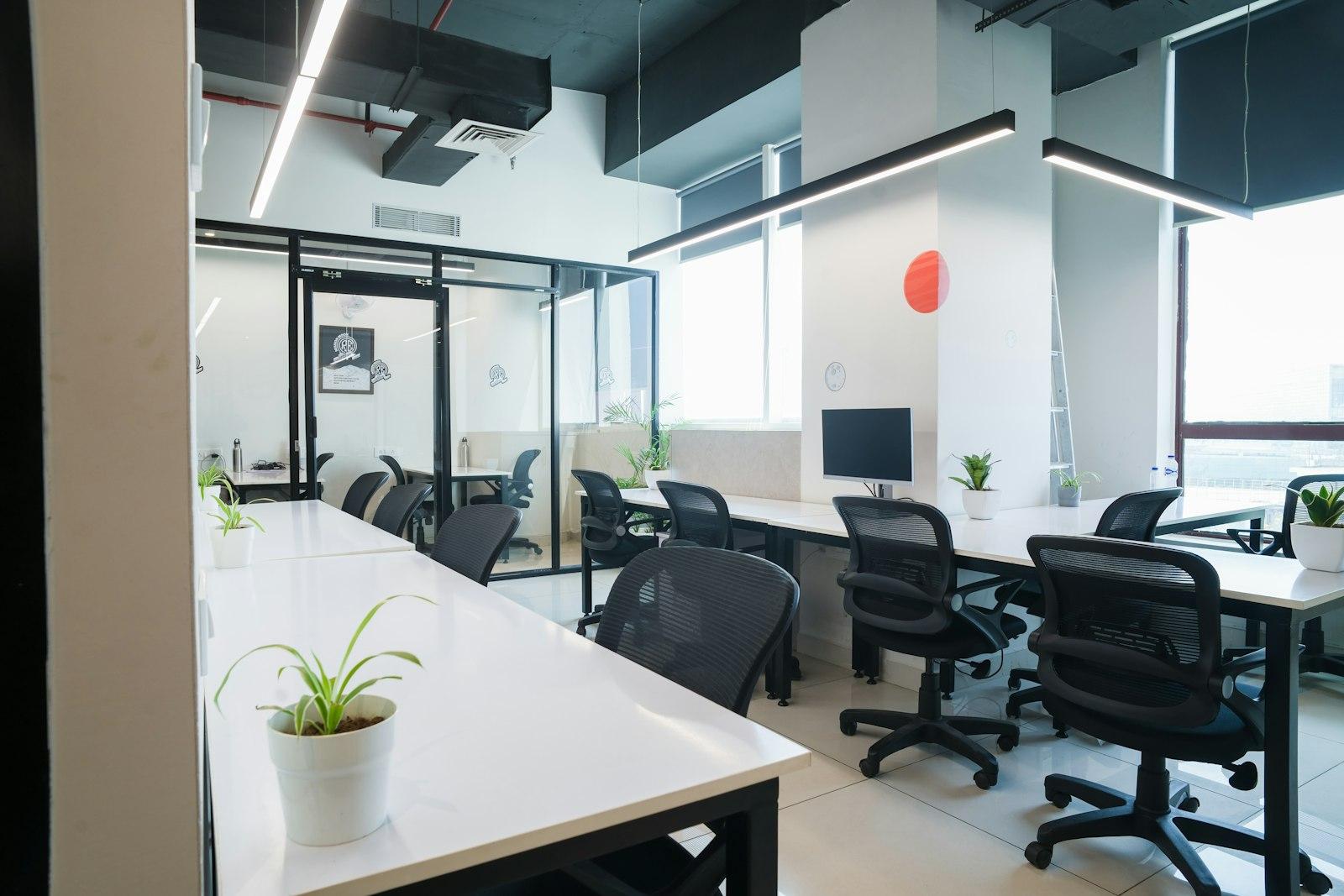
Strict requirements apply to the workspace itself. If the room has no separate entrance and its own facilities, it is a non-independent workspace and you deduct no part of your rent, housing costs, energy or municipal charges. That is set out in detail in is a workspace at home deductible, and in practice almost every freelancer with a study falls into that box.
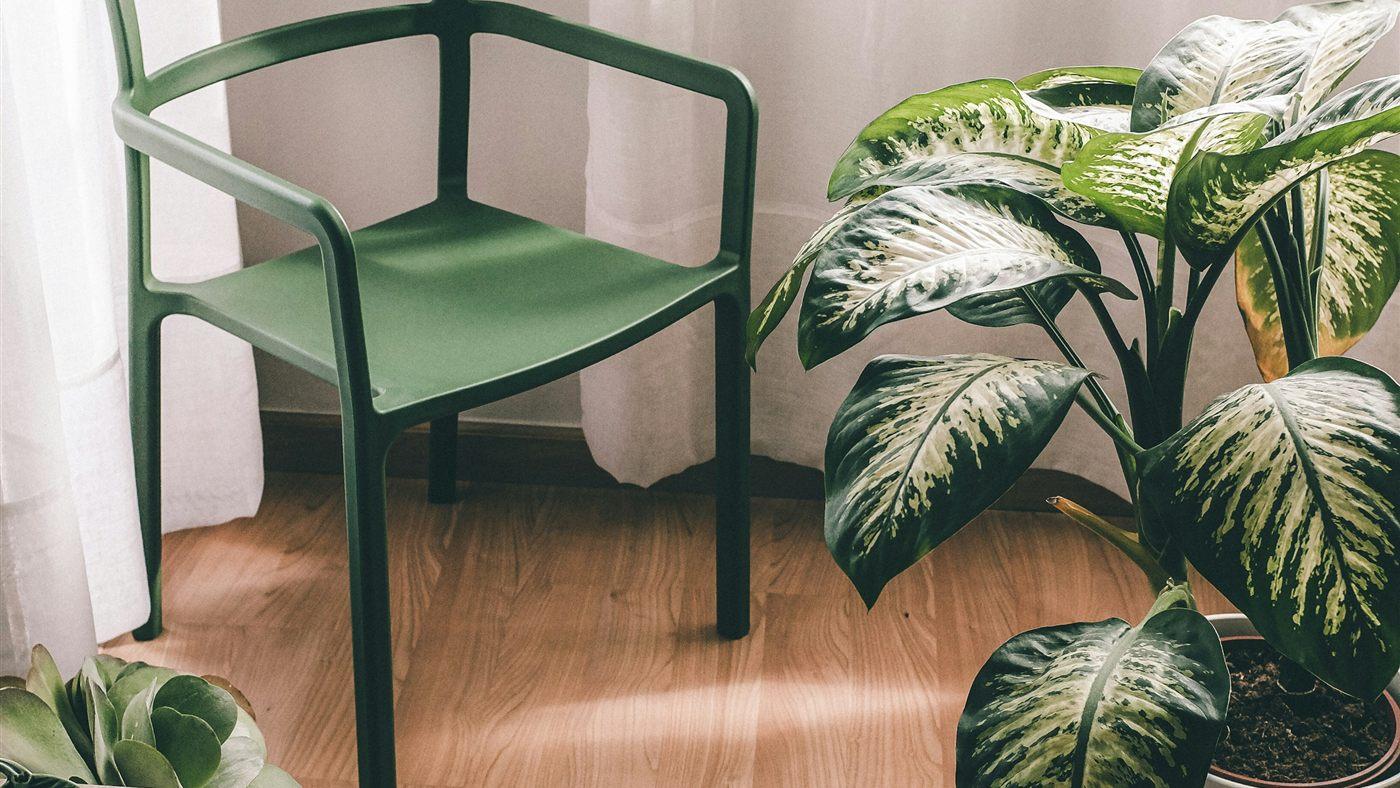
For the furnishings in that room something very different applies. A desk, chair, monitor, printer or filing cabinet is a business asset if you use it for business. The requirements for the room play no part in that. If you work at that desk five days a week for your business, the desk is a business asset, even if it stands in the corner of your living room.
Under or over 450 euros
The practical threshold is 450 euros excluding VAT per item. Stay below it and you deduct the purchase in one go in the year of purchase. Go above it and you capitalise the asset and spread the cost over the years you use it, usually five years with a residual value. See capitalise or deduct at once and straight-line or reducing balance depreciation.
| Purchase | At once or depreciate | VAT | Watch out |
|---|---|---|---|
| Office chair € 700 | capitalise, around € 140 a year | reclaim in proportion to business use | estimate a residual value |
| Desk € 350 | deduct at once | fully reclaimable for business use | keep the receipt |
| Monitor and keyboard € 300 | deduct at once | same | assess per item, not per receipt |
| Lighting and cabinets € 200 | deduct at once | same | the business share only |
| Renovating the room | not deductible for a non-independent space | no deduction | belongs to the home |
Worked example: a € 700 chair excluding VAT
- Purchase price excluding VAT
- € 700 (invoice € 847 including)
- VAT reclaimed in your return
- € 147
- Residual value after 5 years
- € 100
- Depreciation per year
- (700 - 100) ÷ 5 = € 120
Result: In the year of purchase the chair therefore lowers your profit by € 120, not by € 700. Buy in July and you count half a year
Mixed use: splitting and correcting
If the whole family uses the desk in the evening, the purchase is not fully business. For income tax you may usually treat an asset used both privately and for business entirely as business property, but then you correct the private use. For VAT the rule is harder: you reclaim only the business share, or you correct the private part at year end. The same approach as for phone, laptop and internet.
Record your split, however simple. A note in your records saying 'desk and chair are used 80 per cent for business' is enough to explain later where your percentage comes from. Without substantiation any percentage is a guess, for the inspector too.
Things you already owned
If you already owned the desk before you started, you do not need to buy anything new to make use of it. You bring it in at the value it still has at that moment and depreciate from that amount. Reclaiming VAT is no longer possible, because you paid it years ago as a private individual. See bringing private items into your business.
Two things that often get mixed up
The first confusion comes from employees. They can receive a tax-free working-from-home allowance and compensation for ergonomic equipment through the work-related costs scheme. That scheme is for staff, not for you as a sole trader. You do not need an allowance: you simply buy it through the business and deduct it.
The second is the investment deduction. If in one year you buy more than the threshold in business assets, you get an extra deduction on top of the depreciation. Individual purchases under 450 euros do not count towards it. See the small-scale investment deduction to work out whether you reach it, for instance if you also buy a laptop and tools in the same year.
Frequently asked questions
Is an office chair deductible if I have no separate study?
Yes. The strict requirements apply to the space, not to the furnishings. If you use the chair for business it is a business asset, even if it stands in your living room.
Can I deduct a 600 euro desk in one go?
No, above the 450 euro threshold excluding VAT you capitalise the purchase and depreciate it, usually over five years with a residual value. You do reclaim the VAT immediately.
I buy a desk and a chair on one 700 euro receipt. What then?
You assess per asset, not per receipt. If they are two separate items each under 450 euros, you deduct both at once. If together they form one unit you do not use separately, you capitalise them together.
Can I reclaim the VAT in full?
Only for the share you use for business. If you also use the desk privately, you reclaim the business share or correct the private use at year end. Record your split.
And the energy costs of my study?
With a non-independent workspace they are not deductible, just like rent and other housing costs. That is exactly the difference with the items in it, which can be deductible.
Sources
- Workspace at home: when is it deductibleBelastingdienst · belastingdienst.nl
- Depreciating assets and the € 450 thresholdOverheid.nl · ondernemersplein.overheid.nl
- Small-scale investment deduction 2026Belastingdienst · belastingdienst.nl
Sources checked on
This article provides general information based on the rules known for 2026 and does not replace personal tax advice. For your specific situation, we're happy to take a look with you.